Best Buy
The Ask: Design a digital tool that improves in-store shopping navigation.
Best Buy was once a reliable place to visit for advice from someone who knew what they were talking about, but now, it’s a challenge to find anyone in sight.
As online shopping started to take over, Best Buy had to shut down many of their retail stores and lay off employees across the country.
They tried to accommodate by adapting an omnichannel model, with various kiosks. But they have neglected the quality of their in-store experience completely.
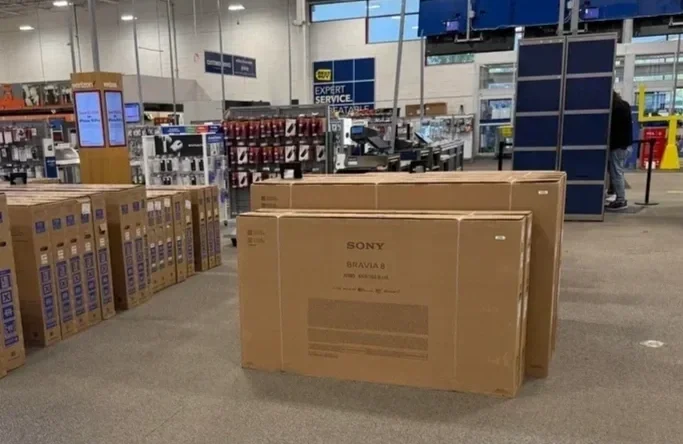
Best Buy feels like an unattended warehouse.
For the In-And-Out Shopper, they come in-person to seek reassurance from someone. They get their reviews online, but technology burnout has made it so that they don’t want to branch out. Best Buy is uninspiring because
Technology is built for the future, but it’s displayed on shelves built decades ago.
This is why we want to match the energy of the in-store experience to the technology being sold there.
Brand pivot from "expert-led" to "discovery-driven”
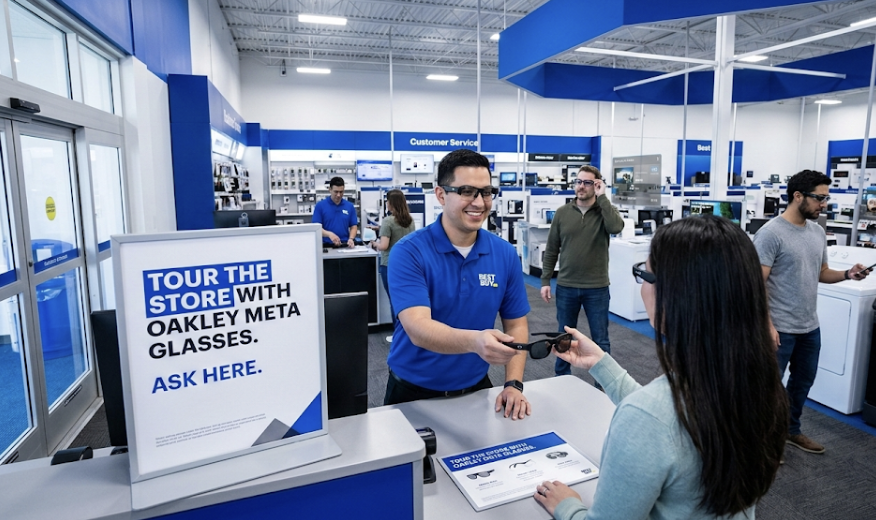
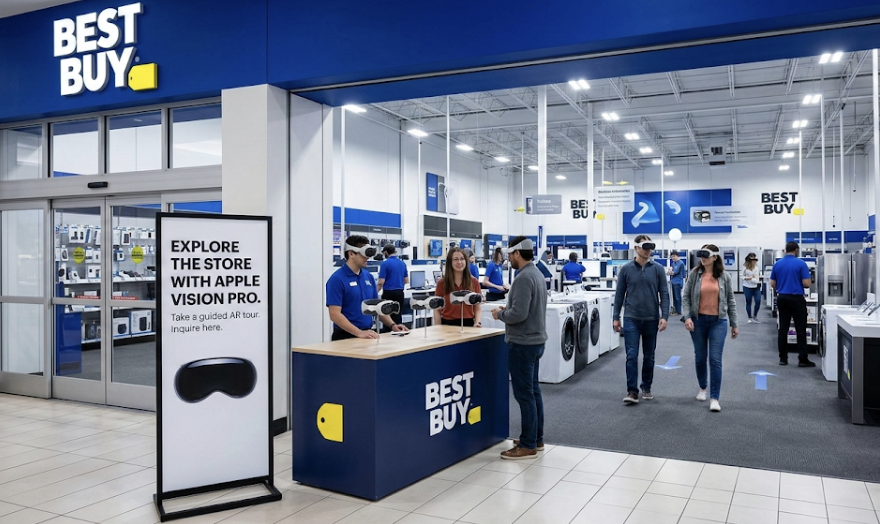
“Navigation Nerd” Smart Glasses are an AI-powered digital layer over the store that adapts to customer needs, reducing reliance on scattered staff while serving omnichannel buyers.
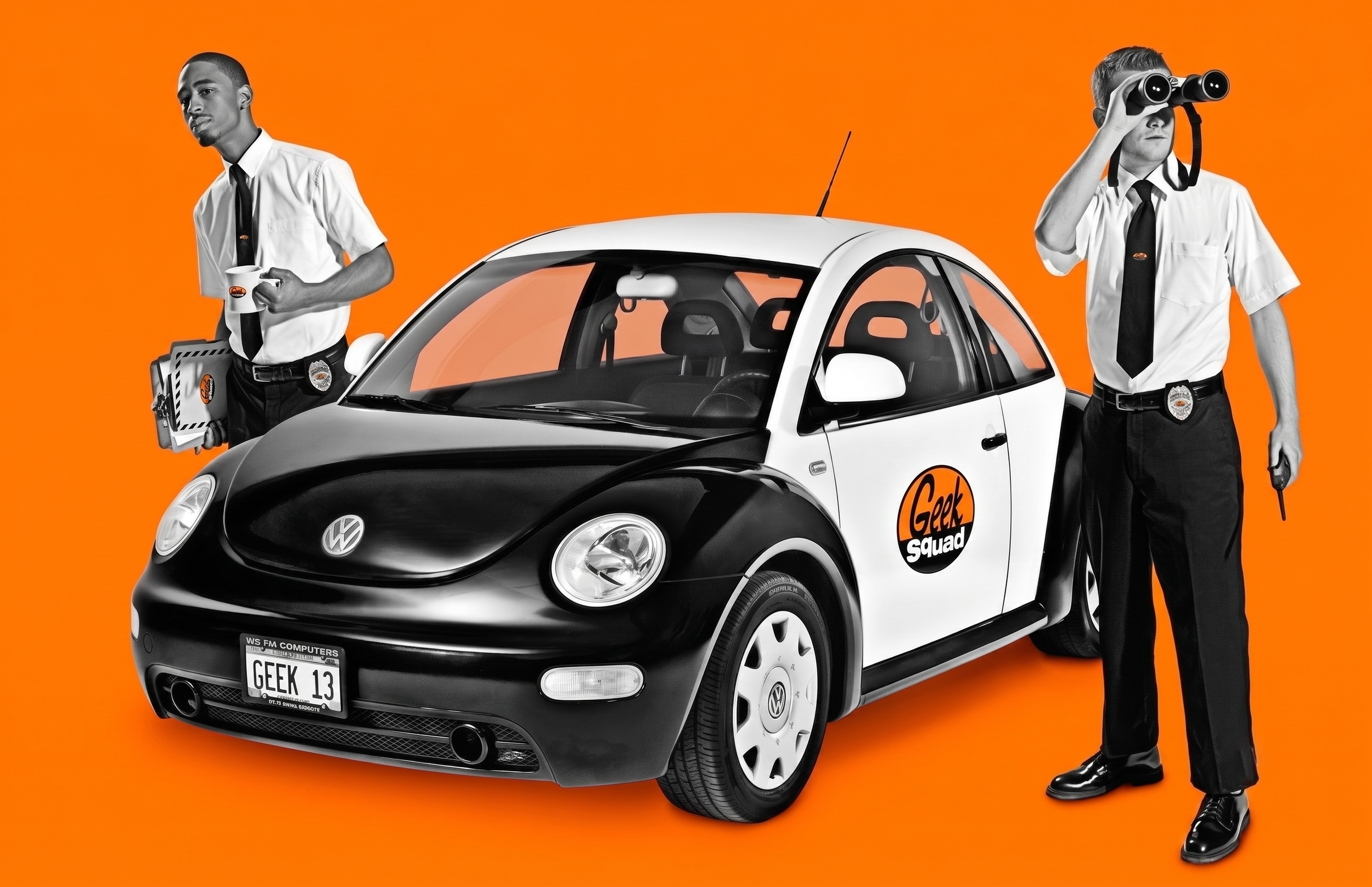
Through immersive, expert-guided exploration, customers navigate Best Buy independently, backed by the guidance of a modern-day Geek Squad.
★ Entrance Check-in: Shoppers grab their wearable assistant at a station just inside the door.
★ Heads-Up Wayfinding: AR visual and audio cues guide shoppers straight to the exact aisle and shelf.
★ Immersive Curation: Dynamic demos, live price-match info, and "Tech Curation" based on browsing history surface in the user's field of vision.
★ Compare Mode: Users look at products in sequence to hear key specs, prices, and see "Add to Cart" or "Schedule Geek Squad Setup" buttons appear in AR.
This project would allow shorter time-to-first-product-found, longer average dwell time post-checkpoint, and higher attach rate on "Schedule Geek Squad Setup" conversions initiated in AR.
Best Buy will be the place for people to go to understand what they're buying, not just a place to pick up the box.
Team
Nathan Tran (ST), Kassandra Levya (ST), Divyya Munshi (ST), Tomás Linquist (ST), Nan Marsh (ST)
Background
Best Buy built its reputation on expert-led, in-person guidance to help customers make confident decisions about complex technology.
But competitors like Amazon are taking over, and they have pivoted towards more online models themselves.
Problem
Best Buy feels like an unattended warehouse, with no accommodations for the in-person assistance they were once known for. Idle service desks, dusty displays, and boxes cluttering the aisles make it a directionless place to shop.
Best Buy’s omnichannel model has hurt the quality of in-person assistance they once were known for.
They have faced over 12 quarters of declining sales and are operating approximately 615 fewer stores than they did a decade ago. Best Buy has been ranked among the most disliked companies for service — plagued by poor staffing, damaged deliveries, and a lack of anyone around in stores to help.

Insight
X% of people look online first for their information about technology, then go to pick it up. But 25% also want AI tools to help them try out the devices. The products have kept up with the times; the place they're sold hasn't.
Technology is built for the future, but it’s displayed on shelves built decades ago.
25% of consumers want AI tools to help them try devices before buying
Target
In-and-out shoppers.
Consumers visiting for under 10 minutes for online pickup are a growing portion of in-store traffic. By targeting efficient, certainty-driven buyers who treat the store as a final checkpoint, not a browsing destination — we can show them in-store navigation can be quick and effective, not a hassle.
It will excite them about technology again.